
Fewer than one in two hundred international students in Japan is Indian.
As of 1 May 2025, JASSO counted 1,661 Indian students in Japanese higher education. Nepal, with a population of around 30 million against India’s 1.4 billion, had 55,607.
I am not going to pretend that gap is a hidden opportunity nobody noticed. It exists because the route from India into a Japanese Master’s is badly documented, and because most of what is written about it in English is either out of date or written to sell something. This piece is my attempt at the honest version.
What the route actually is
An English-taught Master’s programme at a Japanese university, applied for during your final year of B.Tech.
You do not need Japanese for these programmes. Coursework, seminars and supervision are in English, and JLPT is not required. Japanese is still worth learning for daily life, and some funding schemes attach their own language conditions, so read the terms of anything you plan to apply for.
Your first realistic intake is October 2027
This is the part that catches nearly everyone.
Japanese universities run two entry points. April is the main intake, following the Japanese academic year. October or September is the second, and it is the one built around international students.
If you are in your final year of B.Tech now, you finish in May or June 2027. Japanese April enrolment happens on 1 April 2027. On that date you have not completed your Bachelor’s degree, and eligibility requires you to have graduated, or to be expected to graduate, by the enrolment date.
A student graduating in May or June 2027 cannot enter in April 2027. Read that twice, because it is the single most expensive misunderstanding I deal with. Your first realistic entry is October or September 2027, with April 2028 as the fallback.
If you graduated in 2026 or earlier and already hold the degree certificate, April 2027 is open to you, and the windows closing between now and December matter a great deal.
What it costs, and what the figures leave out
The MEXT standard national rate for a Master’s programme is ¥535,800 a year.
Two things about that number. It is a standard rate, not a ceiling, and institutions set their own fees. Institute of Science Tokyo charges ¥635,400. The University of Tsukuba has announced an increase for international students from April 2027 and has not yet published the figure.
Tuition is also only one line. There is an admission fee, living costs, the visa, flights and the deposit your accommodation will want. Any cost estimate that nets off what you expect to earn from part-time work is not a cost estimate. Japan’s Immigration Services Agency states plainly that covering the full cost of tuition and living expenses through part-time work is not accepted.
All yen conversions in our material use 1 JPY = 0.5989 INR, taken 26 August 2026.
On proof of funds, the strongest thing I can tell you
No Japanese government body publishes a monetary threshold for proof of funds.
If a consultant quotes you a figure, ask them for the source. There isn’t one. What exists is a requirement to demonstrate that the course can be funded, assessed case by case, and that is a different thing from a number you can hit and stop worrying.
On scholarships, plainly
MEXT and JASSO come up in every conversation, so here is where they stand.
The MEXT embassy-recommendation window for 2027 entry closed in India on 15 May 2026. Anyone suggesting a 2027 embassy application is still possible is wrong. The University Recommendation route remains live, and it rides on your university application rather than being a separate one.
JASSO Honors is not generally available. It is means-tested against ¥90,000 a month of allowance from home, and it carries a language threshold. The student does not apply for the reservation scheme either. The school applies.
We do not prepare fully funded scholarship applications. That is a deliberate decision, not a gap we are hiding. The documentation load is heavy, the hit rate is low, and we would rather tell you the schemes exist and let you decide than take a fee for filing something unlikely to land.
Two things that catch Indian applicants out
Supervisor consent is a condition, not a courtesy
At several universities a faculty member has to agree in advance. Institute of Science Tokyo will not consider an application without it. The University of Osaka requires approval from an academic advisor before you apply. Requirements differ elsewhere, so check each programme rather than assuming.
Admission pages go stale
Every programme publishes its own guidelines document for each cycle, and that document is the only source worth trusting. University overview pages are frequently a cycle or more behind. We have found third-party dockets circulated to advisers with tuition figures wrong by over ¥100,000 a year.
What we are, and what we are not
Top Uni Admit has placed students abroad for fifteen years, around 175 a year, into Australia, Canada, the UK, the United States, Germany and France. I have personally counselled the majority of them.
We have placed zero students in Japan. This is a new desk and I am not going to dress that up.
What sits behind it is Webmob Software Solutions, which I co-founded. It has 150 engineers, three years operating in Japan, and approval under JETRO’s Invest in Japan initiative. I have made nine trips to Japan since 2023, ranging from five days to three weeks. That is where the Japan knowledge comes from, and it is a different kind of proof from a placement record.
For Japan, I am the counsellor. Not a team member, not a junior. That will not change while the practice is small, which is deliberate.
We promise information and preparation. We do not promise admission, scholarships, jobs or internships, and you should be wary of anyone who does.
If you are comparing advisers, one question sorts it quickly. Ask who runs their Japan desk, and whether that person has ever worked in Japan.
What it costs to work with us
₹70,000 end to end, across a process that runs five to ten months.
₹2,500 for the initial consultation, before any counselling time is spent. ₹35,000 when your applications are ready to submit. ₹32,500 when the visa is ready to file.
Most study-abroad advisories, including ours, earn from two sides: a student fee, and commission that universities sometimes pay. We do both on Australia, Canada, the UK, the US, Germany and France. On Japan we currently have neither, no university tie-ups and no commission arrangements, so today your ₹70,000 is the only thing we earn. If that changes I will tell you. What will not change is that your shortlist gets built on fit.
Where to start
Three things, in this order.
Work out whether the course can be funded. Not approximately. If the answer is “not sure”, that is a reasonable answer and worth a conversation, but it is the first question, not the last.
Get your transcripts and an expected-graduation certificate moving. Both depend on your college office rather than on you, which makes them the slowest items on the list.
Then shortlist programmes against the published guidelines document for each, checking the English-taught status and the supervisor requirement programme by programme.
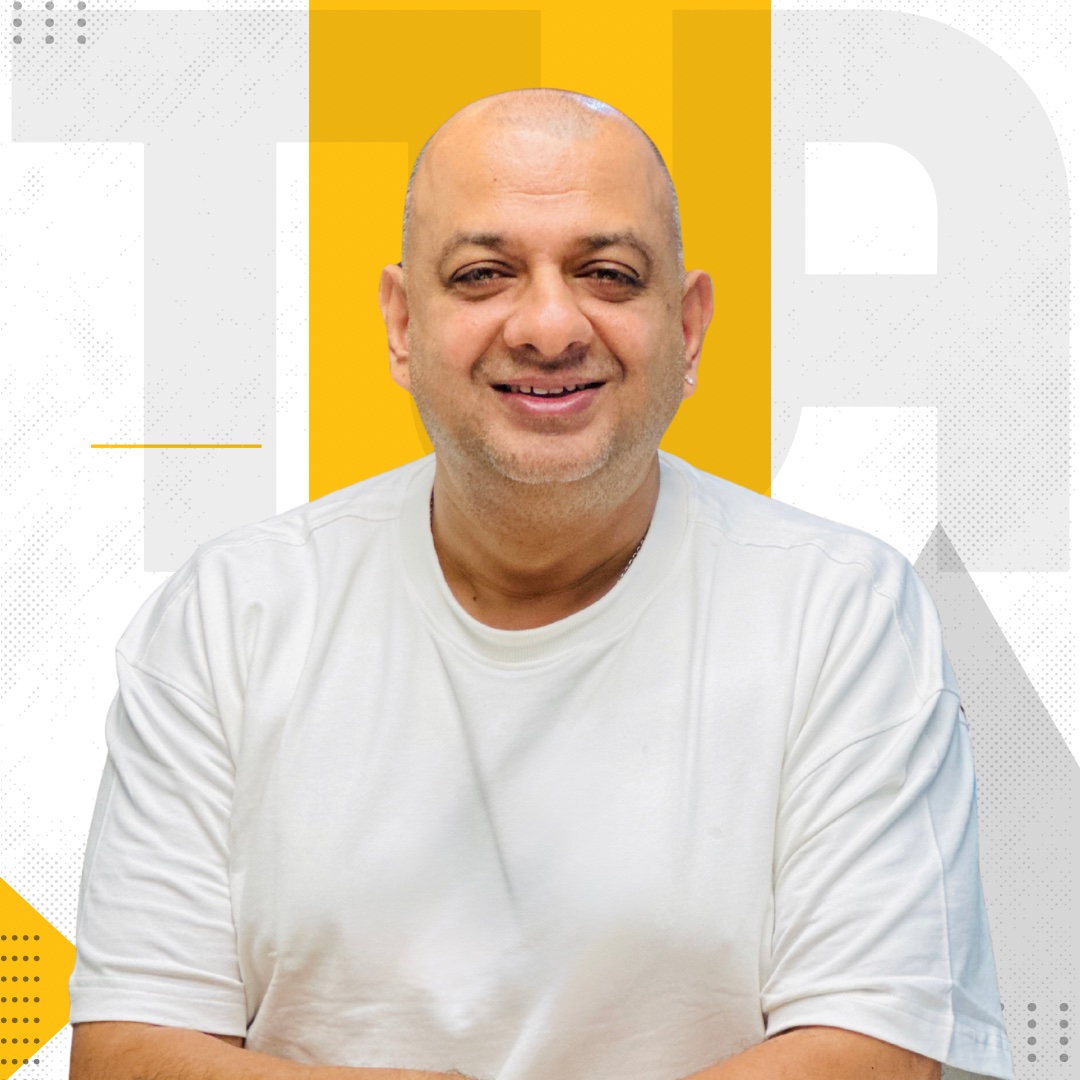
Sachin Gupta founded Top Uni Admit and runs its Japan desk. He handles every student conversation and every institutional contact for Japan personally. Top Uni Admit has advised Indian students on overseas study for fifteen years across Australia, Canada, the UK, the USA, Germany and France.